

Ep 112. Money Mindset: Are You Undervaluing Your Gifts?
10/20/2026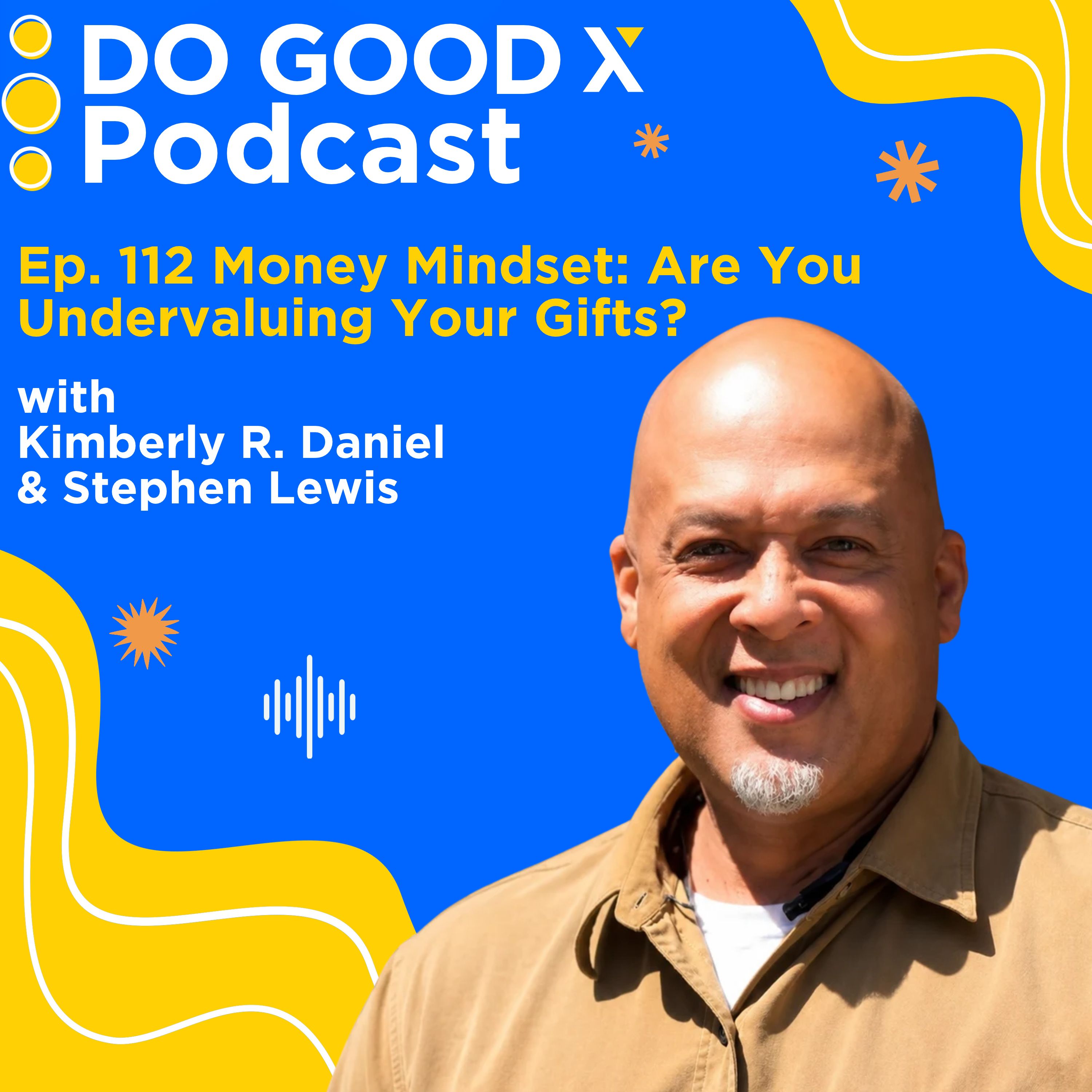
How can faith-driven entrepreneurs improve their money mindset and stop undercharging? Start by recognizing the value of your expertise, setting boundaries around generosity, and treating money as a tool for building a sustainable, purpose-driven business.
DO GOOD X hosts Kimberly Daniel and Stephen Lewis welcome Michael Wright, a storyteller, minister, photographer, and entrepreneur, to explore how our beliefs about money influence pricing, service, and business growth. Michael challenges the assumption that having a calling means giving your work away and shares what helped him recognize the value of his own gifts.
Through a reflective story about a grandfather and grandson, Michael explores inherited financial fears and the possibilities that open when we put our resources to work. Discover how fair pricing and intentional generosity can support your mission, create opportunities for your community, and help you build a lasting legacy.
What You’ll Learn in This Episode:
✅ How inherited money beliefs can influence your confidence, pricing, and business decisions.
✅ Why your calling can support both meaningful service and financial sustainability.
✅ How to honor your expertise and stop negotiating against yourself.
✅ Why generosity needs boundaries and how money can create opportunities beyond your business.
Join the DO GOOD X Community to access resources, connect with purpose-driven entrepreneurs, and grow your impactful business with intention.
In This Episode
TIMESTAMPS:
00:37 Meet hosts Kimberly Daniel and Stephen Lewis
01:02 Introducing Michael Wright and the beliefs we carry about money
03:23 Money as a tool for opportunity and legacy
04:48 Why having a calling does not mean working for free
06:42 Recognizing your value and overcoming undercharging
09:14 Stewardship, fair pricing, and generosity with boundaries
11:25 Money lessons Michael would share with his younger self
13:26 A storytelling practice about inherited financial beliefs
18:58 Reflecting on where you direct your money
19:13 Using your gifts and resources to create community opportunities
Key Takeaways
KEY TAKEAWAYS:
💎 Your gifts have value. Charging fairly can help sustain the work you feel called to do.
💎 Recognize when you negotiate against yourself. Your pricing should account for the expertise, preparation, and effort behind your service.
💎 Generosity works best as an intentional choice. Giving beyond what you can afford can undermine your ability to keep serving.
💎 Think beyond how much money you can hold. Consider what your resources can make possible for your family, business, and community.
About The Hosts
Kimberly Daniel
Kimberly R. Daniel catalyzes entrepreneurs and organizations to do good. She is co-founder and project director of DO GOOD X, a community that provides programs and support for faith-driven social entrepreneurs whose businesses focus on positive Change.
Kimberly also helps purpose-driven organizations clarify and design compelling brand and communication strategies. With over 15 years of experience developing and leading communications efforts, it is her commitment to produce effective processes and create authentic, “sticky” brands that are community-centered.
In addition, Kimberly has nearly 10 years of experience as a certified life coach and has facilitated workshops, spoken to communities, and written about innovation and entrepreneurship centered on social impact. She is co-author of A Way Out of No Way: An Approach to Christian Innovation (2021).
In any aspect of her work, she is deeply passionate about purpose, meaning, and the common good.
Social Media to Connect:
Stephen Lewis
Stephen Lewis is the president of the Forum for Theological Exploration (FTE) and creator and co-founder of DO GOOD X, a start-up accelerator for diverse Christian social entrepreneurs. He is an organizational change strategist and a leadership development specialist, focused on inspiring the next generation of faith-inspired leaders and entrepreneurs to live and work on purpose. Stephen is the co-author of Another Way: Living and Leading Change on Purpose (2020) and A Way Out of No Way: Approach to Christian Innovation (2021).
Social Media to Connect: